
Real - Time Cinematic Animation in Unreal Engine 5
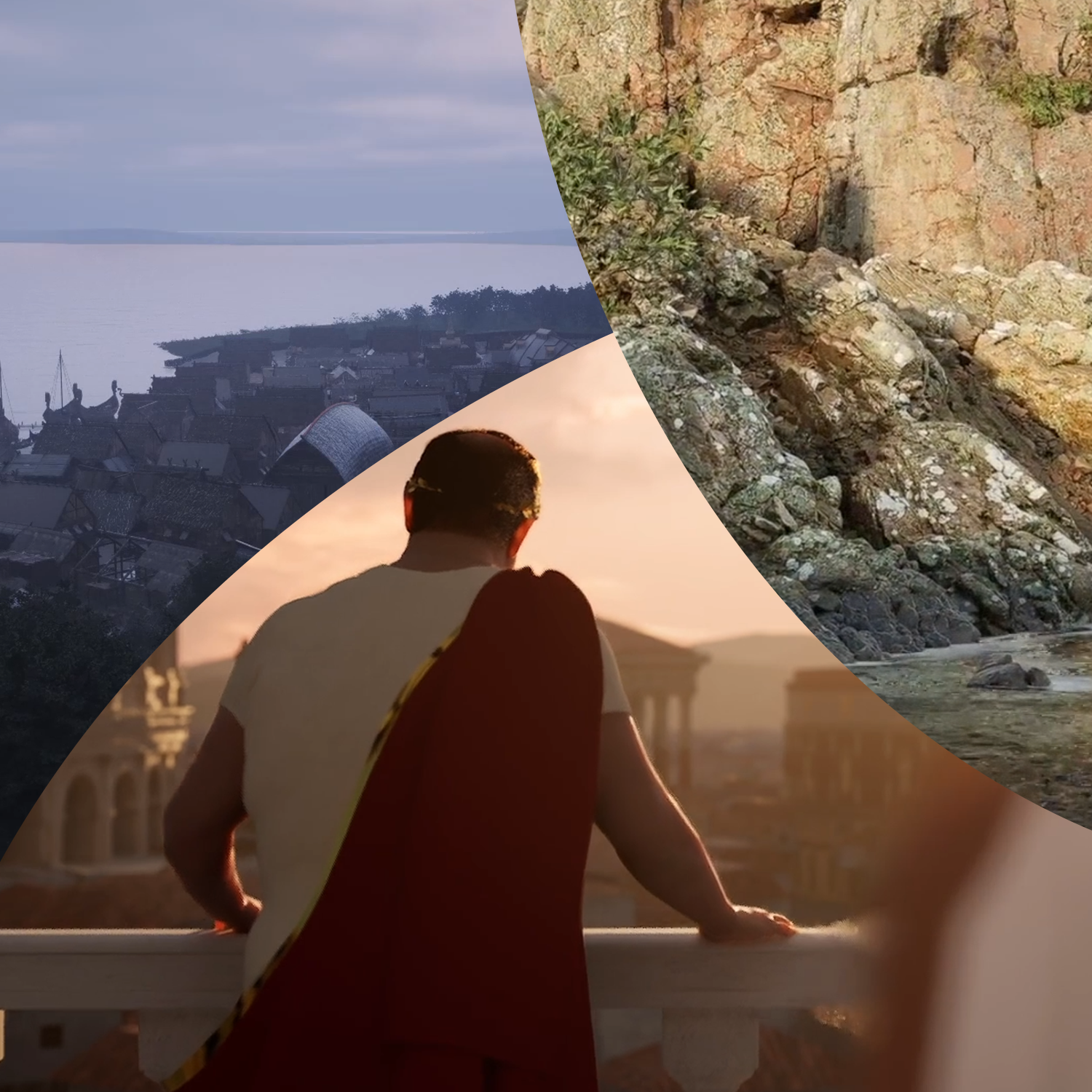
Real-time cinematic animation with Unreal Engine 5
The Studio Konkret team never stops searching for better images, better methods, and greater opportunities to realize their ideas.
That's why we've been experimenting for the past few years to understand one thing: is it possible to create close to cinematic images in real time? Is the quality of a game engine sufficient for serious production? Spoiler alert: yes, it is possible. And here's how it works.
The Viking Village Experiment
To truly test the technology, we decided to do something ambitious - completely recreate a historic Viking village in Unreal Engine 5. We wanted maximum authenticity: realistic buildings, nature, dynamic lighting, even weather - all in real time.
This was our internal project without external funding, so we could experiment as we pleased. And that's what gave us the best results - the freedom to try new approaches without restrictions.

What was the result? Honestly, it was a big step forward for us. The visual realism was impressive.
Despite the high level of visual quality, not all results met the standards of final polishing for offline film production. We encountered minor technical limitations that are acceptable in a real-time environment but would require much more complex solutions in classic CGI production.
But here's what's important: the ability to see changes instantly changes everything. Adjust the lighting and see the result. Change the camera angle and see it immediately. This allows you to experiment and ultimately do a much better job.
The project confirmed that Unreal Engine is indeed ready for serious work. Yes, there are limitations - complex effects need to be optimized, and some things require additional attention. But the gap between real time and classic CGI is getting smaller and smaller. Remember “The Mandalorian” - the entire series was filmed with Unreal Engine on LED walls. This is a new level.
From Vikings to Ancient Greece and Rome
The main advantage of Unreal Engine is its multi-platform capability, so when the Museum of World Culture approached us with the idea of visualizing ancient worlds, we were eager to implement this project.
The task: to create 10 films for a school educational platform about ancient objects from their collections. Not just to show pictures, but to bring history to life - from Greek amphorae to the statue of Athena on the Parthenon. Plus two films about classical myths.
Our audience is teenagers, and they are demanding. The museum insisted on historical accuracy in everything: colors, clothing, architecture - everything had to be correct.
We decided to do everything in Unreal Engine. And here's the magic: real-time rendering meant that we could constantly show the client interim results, quickly get feedback, and make corrections right away. No waiting hours for the render - you change something and see it immediately.
We skipped the classic storyboarding and went straight to animatics to visualize the content. This allowed us to test camera movement, composition, and character placement in the early stages. Many objects had to be created from scratch. A separate challenge was to make people look realistic so that it wouldn't look like a computer game.
The result is 10 films that we are proud of. They bring antiquity to life with real people and their stories. We worked on Greek and Roman content in parallel, showing not only each culture separately, but also how they influenced each other.
Why real-time rendering is cool
Speed. What used to take hours to render now takes seconds. It takes much less time compared to offline rendering, which means more experiments, more iterations, and higher quality.
Quality. Unreal Engine 5 with the Lumen system looks similar to offline rendering. There are a lot of drawbacks but the speed more than compensates for it. And there are a lot of ways around the problems that emerge. Depth of field, cinematic effects, realistic materials - all of this works in real time.
Savings. According to our observations, production acceleration is increasing by at least 200-400%. Projects that used to take months are now done in weeks. For clients with tight deadlines - marketing campaigns, game trailers - this is critically important.
Flexibility. You can change scenes at late stages without dire consequences. This leads to better results because you can implement new ideas whenever you want.
Versatility. You can do everything from a single project: high-resolution images, cut scenes, interactive content for VR/AR. The same content for a game can be adapted for a museum installation or social media.
What we do:
- Game trailers and cutscenes. We create in-game cinematic scenes for games - from AAA to indie. It looks similar to a CGI trailer, but made faster.
- Advertising and marketing. 3D animation for brand campaigns, TV commercials, and Instagram content. We can respond quickly to feedback and make changes on the fly.
- Museums and education. We create historical visualizations and interactive exhibitions. Like with our project on antiquity — when history comes to life.
- Virtual production. We build 3D environments for film, TV, and events. We support LED wall and live broadcast projects by creating environments, visual assets, and real-time animations that enhance the overall experience.
Let's work together
We are a team that combines gaming technology with cinematic quality. We work with game developers, filmmakers, marketers, and museums.
Need a cinematic scene for a game? A series of animated videos for social media? Historical visualization for a museum? An interactive installation for an event? We know how to do it.
Check out our projects on the website. If you are interested in discussing ideas or just talking about the possibilities of Unreal Engine, write to us. We will help with the concept, workflow, and even the budget. No strings attached.
The future of animation is here. Let's create something awesome together.