
What is Cel animation?

What is Cel animation?
Today we will talk about Cel animation, which can bring stories to life, create worlds, and give characters personality.
Despite the popularity of 3D animation today, cel animation remains highly regarded due to its special connection with the artist, who gives each movement and frame a unique character.
A distinctive feature of Cel animation is frame-by-frame drawing, which captivates with its detail and sense of rhythm and timing of movement during playback.
From traditional Cel animation to modern processes
Interestingly, Cel animation was the industry standard for most of the 20th century, when each scene was drawn by hand. Characters and moving elements were drawn frame by frame on transparent sheets, which were then superimposed on painted sheets.
Each scene was photographed separately, which made the process laborious and time-consuming, but this did not prevent the creation of thousands of dynamic, exciting animations that still captivate hearts with their uniqueness and soul.
It is interesting to note that Modern Cel animation works on the same principle, but instead of pencil sand paper, artists now use tablets and specialized software, which facilitate the editing process and provide greater creative freedom.
This development preserves the spirit of traditional animation while adapting it to modern production needs.
Modern cel animation tools
Today, cel animation is created using digital tools that ensure an efficient workflow while preserving the feel of hand-drawn animation.
Among the most advanced software tools that work in cel animation, we can highlight:
- Toon Boom Harmony - the industry standard for professional 2D animation, widely used in television and commercial projects.
- TVPaint Animation - known for its organic brush engine that mimics traditional drawing materials.
- Adobe Animate - often used for frame-by-frame animation in combination with design-oriented processes.
- Adobe Photoshop - used for frame-by-frame animation, illustration, and working with textures.
The cel animation workflow
Creating cel animation is exciting at every stage, because each animation is unique in every frame and character.
Frame-by-frame drawing
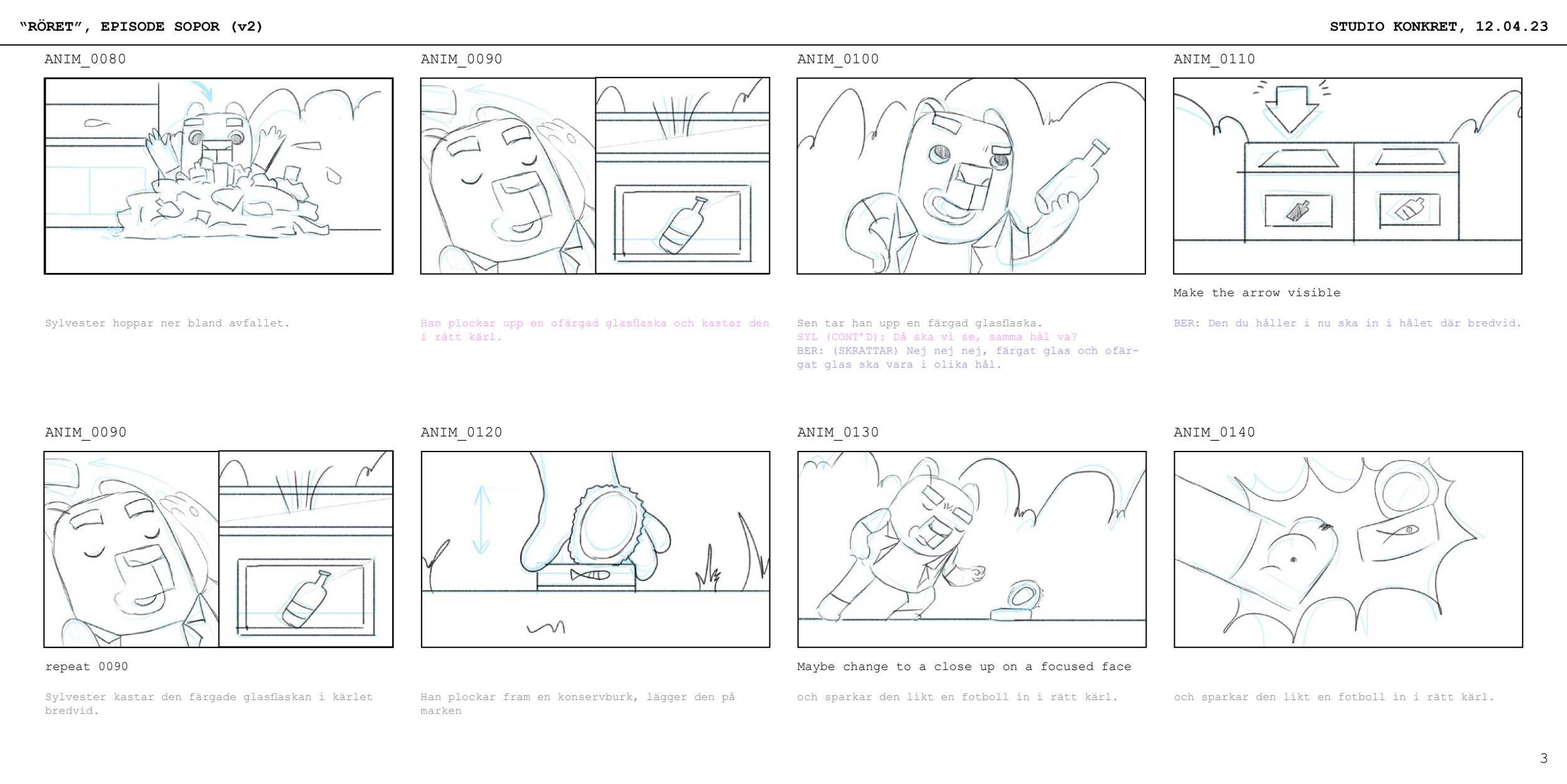
To create animation, the artist begins by drawing key poses - keyframes at predetermined frame numbers. This is necessary in order to set the timing, rhythm, and sense of movement and poses of the characters.
After that, in-betweens are added to connect the keyframes. This process is done manually, unlike programs that create in-betweens automatically.
An interesting pattern is that the more in-betweens are used, the smoother and more detailed the movement becomes.
This entire process is done in the form of rough sketches, where the main focus is on the dynamics and readability of the movement, rather than on the details.
Working with layers
Once the movement has been approved, the animation moves on to the next stage -clean-up. The artist creates characters, backgrounds, effects, and lighting, separating the elements into different layers.
This approach expands the possibilities for working with the scene and allows you to edit individual elements without affecting the entire animation, maintaining flexibility in the production process.
Color and compositing
The next step is to add color and shadows pass that enhance the mood, and depth of the image while preserving the character of the hand-drawn image.
After that, all elements are combined at the compositing stage, where camera movement, depth of space, and atmospheric effects are added as needed.
This final stage allows you to assemble the scene into a coherent, expressive, and captivating animation.
Cel animation in practice
Ponvory – Blackout
Ponvory - Blackout is our most representative project, in which cel animation forms the basis of the visual language.
We began working on this minute-long anime-style animated video for Vanda Pharmaceuticals in the fall of2024, and it premiered on ABC during the Oscars in March 2025.
The project is based on frame-by-frame hand-drawn animation, which allows us to accurately convey character, emotion, and rhythm of movement.
The work began with the script and storyboard, after which the characters and animation were developed in parallel. In the final production, cel animation is combined with 3D and2.5D techniques, adding depth and dynamism while preserving a warm, organic, hand-crafted feel.
Other projects illustrate how cel animation can be used selectively or combined with other techniques:
Röret (SVT)
Röret is an animated TV show for children, created in collaboration with Snowbird and Alaska. In each episode, the characters explore the world through questions familiar to every child, and the show's visual language helps make complex topics simple, fun, and understandable.
In this project, cel animation is used selectively-primarily for environments, details, and individual movements, while the characters are rigged. We combined hand-drawn stop-motion animation with 2D rigs and 3D elements to achieve a lively, flexible style while maintaining an efficient production pace.
Sweden Rock 2026
For Sweden Rock Festival2026, we created a new graphic identity in which cel animation works together with 3D. Our intention was to make the3D-animated sword appear as hand-drawn as possible. This was achieved through the use of smear frames and intentionally distorted perspectives, giving the entire visual identity a strong retro 1980s feel.
The result is a visual language that feels loud, energetic, and retro, while remaining instantly recognizable to fans of the festival.
Together, these projects showcase the flexibility of cel animation-from full-fledged character animation to hybrid processes and atmospheric background work.
Why we work with cel animation
Cel animation is an indispensable tool for creating unique and balanced animation. We want our work to be memorable, and this is something that works perfectly in tandem with other techniques and only improves the overall result.
Each line is drawn by an artist, giving the animation warmth, character, and emotional depth.
The digital approach allows us to make changes quickly and work smoothly as a team, which makes cel animation convenient for modern projects, taking into account all the client's edits and wishes. At the same time, it maintains a strong connection with traditional animation values.